Five failures cover almost everything homeowners ask about on artificial turf in Boise and across the Treasure Valley, and they are the five people deal with most often because almost everyone starts with a problem rather than a plan. Some are cheap to put right when they are caught early; others grow into a full rebuild once they are left alone, because the same thing sits behind nearly all of them: what went in under the surface. Three of the five are decided at the base - water that cannot get out, a foundation that cannot hold, and a smell that will not rinse away - and two are decided by what the sun and the traffic do to the surface on top. Each page below takes one problem: the warning signs, what actually causes it, what a licensed pro checks before quoting, how to prevent it, and the published cost bands. This is an independent matching service, not a provider - we do not employ contractors and we do not sell turf installation, and the licensed pro you choose handles the work.
Answer one question first: is it the surface, the base, or the water?
Almost every diagnosis in this niche starts there, and three checks separate the three without any equipment.
- Walk the yard after water. Any spot that still holds a puddle hours after rain, or that feels soft and spongy underfoot, is a base problem rather than a surface one. Dips and soft spots are how a shallow, clogged or shifting base announces itself.
- Pull a corner back where you can and look underneath. You should see clean, washed, angular stone under the turf and a separator fabric at the very bottom of the excavation. A felt-like pad sitting directly under the backing, or a packed, concrete-like crust of road base or decomposed granite, is the source of both the standing water and the smell - and it was installed, not worn out.
- Smell the lawn at 8am and again at 2pm. A yard that is pleasant with your morning coffee and reeking of ammonia by mid-afternoon is showing the heat-catalyst effect on trapped uric acid crystals. No amount of hosing will shift them, because the crystals are non-soluble in water.
A surface that is too hot, faded or lifting is the visible half of the problem. A base that cannot drain, cannot hold, or does not separate is the hidden half, and the hidden half decides the visible one.
The five problems, and what each one points at
- Pet urine odor and build-up - yellowing patches and a lingering ammonia smell that a hose-down and an enzyme spray never fix. Points at the base aggregate and where the weed fabric sits, then at the backing and the infill.
- Drainage and ponding after heavy rain - water pooling on the surface, soft spots, and runoff that lingers against the house or the fence line. Points at base depth, the aggregate material and the slope the base was graded to.
- Turf heat retention - a surface too hot to walk on barefoot on a July afternoon. Points at the fiber and infill spec, and at how much shade the yard actually has.
- Fading and infill compaction - bleached, flattened traffic lanes and infill that has packed down below the blade base. Points at UV exposure, face weight, and how much infill was installed and kept up.
- Seams and edges lifting - visible joins and curling borders, and turf that moves when you push it. Points at the adhesive, the perimeter restraint, and the base under both.
What a fix costs, at ballpark level
Every figure below is a published band from the artificial-turf pack, kept exactly as published. The first two lines are the ones that decide how you feel about the rest of the list.
| Scope | Ballpark |
|---|---|
| Minor cases - infill top-up, brushing, re-sealing a seam | a few hundred dollars |
| Major fixes - section replacement or levelling | several thousand |
| Severe structural issues - full replacement with proper site preparation | full rebuild scope |
| Turf and infill, basic turf with silica sand | $4.00 per sq ft combined |
| Turf and infill, premium rapid-drain turf with zeolite infill | $6.00 per sq ft combined |
| Labour, standard installation | $5.50 per sq ft |
| Labour, pet installation - deeper excavation and edge pinning | $6.50 per sq ft |
| 500 sq ft standard system, all in | $4,970.00 ($9.94 per sq ft) |
| 500 sq ft engineered pet system, all in | $6,827.00 ($13.65 per sq ft) |
| Aggregate base, Class II road base | $40 per ton |
| Aggregate base, #57 clean washed angular stone | $48 per ton |
Two things follow from those bands. First, three of these five problems - odor, drainage and a lifting seam - are usually a symptom of the base, so the base specification is the cheapest line on this page and the expensive one is a rebuild. Second, the published severity ladder is the honest way to price any of them: minor cases may only need sealing, resurfacing or an infill top-up, moderate damage may require section replacement or levelling, and severe structural issues typically need full replacement with proper site preparation. The pros matched to you are checked for ID licensing, insurance coverage and customer references before anyone is sent your way, and any id-licensed crew should be willing to put the base specification in writing before work starts.
The 50 turf problems, in five pillars
Fifty failures cover almost everything that goes wrong with residential artificial turf in Boise, and they organise into five pillars: the pet chemistry that decides whether a yard smells, the sub-base engineering that decides whether it drains, the summer heat and ultraviolet load that decide whether it is usable, the contractor and pricing practices that decide what the work actually costs, and the maintenance and compliance issues that decide how the yard looks in five years. Each entry below gives the failure point in plain terms, the technical or biological reason behind it, and the fix a licensed local pro would carry out. Three of the five pillars - the odor, the drainage and the lifting edges - trace back to the same layer of stone nobody sees, which is why the base specification is the cheapest line on this page and a rebuild is the most expensive one.
Every one of the fifty ends in the same place: a licensed local pro who can name the aggregate, the depth and the compaction standard in writing, and an itemised quote you can compare line by line. Describe the failure in the request form and up to three licensed local pros come back to you free within one business day, and price the scope against the published bands in the cost guide before anyone starts. This is an independent matching service and not a provider - we do not employ contractors and we do not sell installations, and the pro you choose carries the work.
Pillar 1: Pet turf chemistry and dog urine odor control
Every odor complaint in this niche is a chemistry problem sitting in the layers under the blades. The five answers are the aggregate, the separator, the backing, the infill and a live-microbe clean - in that order.
- The 2pm ammonia explosion. The lawn smells acceptable at breakfast and reeks of sharp ammonia by mid-afternoon. Bacteria feed on the uric acid left in the base and give off ammonia gas as they digest it, and heat accelerates that decay. A surface that climbs past 140 F through the hottest hours is what turns a tolerable yard into a suffocating one, which is why the smell tracks the sun rather than the dog. The fix: A pro who reads the layer stack first: open-graded stone with the separator at the bottom of the excavation, then a live-microbe clean applied at dusk, when the heat will not kill the colony before it works.
- Non-soluble uric acid crystals. Rinsing the yard changes nothing, and the smell is back as soon as the turf is wet or hot again. The water and the urea in urine rinse away, but the uric acid is left behind as crystals that are non-soluble in water and bind to the fibres, the backing and the stone underneath - so a garden hose reaches none of it. The fix: A microbe-based deep clean that digests the crystals rather than an enzyme spray that only breaks the molecules up, from a ID-licensed pro who will first confirm the base can be flushed all the way through.
- The weed-fabric urine sponge. A felt-like pad sits directly under the backing, holding a rancid smell a few millimetres below the surface. A non-woven geotextile belongs at the very bottom of the excavation, under the stone, where it separates native soil from clean drainage aggregate. Laid under the turf backing instead it behaves as an absorbent pad and feeds the smell. The fix: One question at quote stage - where exactly does the weed barrier go in the layers? - separates the installers who understand the stack from the ones who do not, and it costs nothing to ask.
- Enzyme sprays that only mask the problem. A generic pet-store enzyme spray freshens the yard for a day and then the smell returns. Enzymes are catalysts rather than consumers: they chop complex urine molecules into smaller pieces and leave the organic matter sitting in the turf and the base, where bacteria resume feeding the moment conditions suit them. The fix: A live-microbe product that actually ingests and digests the crystals, applied at dusk and tarped for 24 to 48 hours so the dry air cannot desiccate the microbes before they finish the job.
- Carpet-shampoo residue in the base. The lawn turns dingy, attracts dust and foams when it is rinsed. Indoor carpet cleaners leave a sticky, high-foaming residue that is trapped in the stone base instead of passing through it, and it holds grit and dust against the fibres so the surface never comes clean. The fix: A cleaner specified for synthetic turf, and an open-graded base that lets the water carry the residue out - both confirmed before any maintenance arrangement is agreed.
- Harsh chemicals that degrade the backing. Bleach or a household chemical is used to chase the smell, and the backing starts to fail. Bleach and harsh products do not break uric acid down. They attack the polyurethane backing instead, and a degraded backing is one of the fastest ways to void a manufacturer's warranty. The fix: A pro who will name the acceptable cleaners in writing and will not treat a yard with anything that puts the 8 to 15 year material warranty at risk.
- Silica sand as an odor reservoir. An infill sold as standard absorbs liquid and holds the smell rather than draining it away. Untreated silica sand clumps together and behaves as an odor sponge, so the base is fed fresh waste every time the dog uses the yard, and the smell has somewhere to live in every weather. The fix: Zeolite or antimicrobial infill in every pet yard, with the type and the application rate written into the quote rather than left to the crew's habit.
- No molecular ion trapping. Nothing in the system is neutralising the ammonia the bacteria give off. Zeolite is a negatively charged mineral that attracts and traps the positively charged ammonium ion before it can off-gas, then releases it when rain or a rinse flushes the base - which is why it is the pet-yard standard. The fix: Specifying a negatively charged zeolite infill at the correct rate, and topping it up every year or two as it settles below the blade base.
- Deep uric-acid saturation in the sub-base. Years of waste have soaked past the infill into the stone, and spot cleaning no longer holds. Once the crystals are distributed through the base, surface sprays and rinses reach only the top fraction of them. Saturated stone has to be treated in place and held wet long enough for the microbes to work through it. The fix: The heavy saturation method from a pro: a concentrated live-microbe drench, a weighted tarp left down for 24 to 48 hours and a full flush afterwards - after a check that the base has the void space to take it.
- Bacteria that keep reproducing and off-gassing. The odor keeps coming back no matter how often the yard is cleaned. Without an antimicrobial or a zinc and silver-ion blade coating, the same waste keeps feeding the same bacterial colony, so the off-gassing restarts every time the surface warms up. The fix: Antimicrobial-treated fibre plus a routine that removes the food source, instead of a cycle of surface sprays that leaves the colony in place.
Pillar 2: Sub-base engineering, aggregate selection and drainage
Nine of these ten are decided before a single roll of turf is unrolled, and only a rebuild changes them afterwards. Ask for the aggregate by name, the depth, the compaction target and the grade - in writing, before work starts.
- Dense-graded base clogging. Water sits on the surface and the yard smells, even though the drainage looked fine on the day it was laid. Class II road base, CMB and decomposed granite are packed with fine dust, sand and clay. Compacted, they form a nearly impermeable crust with close to zero void space, so both water and waste stay where they land. The fix: Open-graded, clean, washed angular stone with the fines washed out, and a quote that names the material rather than describing it loosely as road base.
- Excavation that is too shallow. The yard feels unstable, ponds after rain and develops soft spots within a season. A base under 3 inches saturates quickly and pools at the surface. The optimised depth is 3 to 4 inches compacted, 4 inches minimum where dogs use the yard and up to 6 inches in heavy clay. The fix: An itemised quote that states the excavation depth, because it is the line item that decides how much stone is bought and how the yard behaves in year five.
- Rounded pea gravel that will not lock. The turf rolls, buckles, wrinkles and sinks where it is walked on. Smooth, rounded gravel has nothing to interlock when it is compacted, so it never forms a stable plate. Angular crushed stone locks together into a surface that stays put underfoot. The fix: Angular, crushed, open-graded aggregate specified by name with the invoice to match - the material is the difference between a base and a pile of loose rock.
- Sub-base settling and trip hazards. Dips and trip edges appear over the first year, and the seams start to move with them. Base rock has to be spread and compacted in damp 2-inch lifts to 95% Standard Proctor density. A base placed in one thick pass leaves a loose bottom that settles later, whatever the surface above it looks like. The fix: A pro who states the compaction target and the lift depth in the quote, and who can show the plate compactor on site rather than promising it in conversation.
- No permeable void space. The yard cannot pass a spring storm, so water sheets across the surface instead. #57 clean washed angular stone - three-quarter inch down to a quarter inch - keeps roughly 40% of its volume as open void, a continuous network of channels that passes water vertically and fast. The fix: That specification named in the quote, plus 1.33 tons of aggregate per 100 sq ft at a 4-inch depth and a 10% compaction buffer so the job does not come up short before it reaches grade.
- Clay subgrade contamination. Fine sediment pushes up at a low edge and the drainage slows down year by year. Skip the non-woven geotextile at the bottom of the excavation and native clay migrates upward into the clean stone, filling the very voids the drainage depends on. The fix: A separator fabric flat over the compacted subgrade, overlapped and pinned - and a direct question about which layer it belongs in.
- Standing water at the foundation. Runoff lingers against the house, the patio slab or the block wall long after a storm. The base has to be graded with a 1% to 2% fall away from structures and toward a legal exit point. Flat or reverse-graded ground traps water and turns the lawn into a liner. The fix: The grade stated in the quote and the low point identified before work starts, because water obeys the fall it was given and nothing else on the page.
- A bumpy surface with no bedding layer. The finished surface feels uneven underfoot and reads as lumpy in low sun. Large three-quarter inch rock is not a screeding surface. A thin layer of clean 3/8-inch chip stone (ASTM #8) is what gives the backing a level bed to sit on. The fix: A two-layer base - structural stone below, clean chip bedding above - priced from the start rather than dropped to save a load of material.
- Levelling with stone dust or sand. A crust forms under the turf and both the drainage and the smell get worse, not better. Sand and stone dust are absorbent, and once compacted and dry they set into an impermeable, concrete-like layer that blocks the drainage channels and locks waste in place. The fix: Clean 3/8-inch chip stone as the only bedding material, and a pro who states that in writing before quoting.
- Lifting edges and perimeter collapse. The border curls, the surface slides when it is pushed, and corners lift underfoot. A solid edge restraint is the structural frame that holds the base and the surface in tension. Without it the sub-base and the turf migrate, and a dog has a corner to lift. The fix: Edging fixed down with adhesive, galvanised U-pins or rust-resistant screws, with the compacted base set 1.5 inches below the top of the border so the finished lawn meets it level.
Pillar 3: Freeze-thaw winters, summer heat and meltwater drainage
Heat and ultraviolet load are specification decisions, and spring silt and freeze-thaw movement are base problems. The cheap answers are shade, a rinse routine and an infill top-up; the expensive one is a re-surface over a base that never drained.
- Surface temperatures past 150 F. The lawn is too hot for bare feet and paws through the middle of the day. Synthetic fibres cannot cool the air by evaporation the way natural grass does, so the solar energy stays in the surface. Published figures put full-sun surfaces at 150 to 180 F against a paw-safe threshold near 110 F. The fix: Stay-cool reflective fibre priced at specification, plus shade over the run path - the two decisions that move the peak rather than treating the symptom.
- Low-E window reflection scorching the fibres. A band of turf in line with the glazing is singed, melted or burned through. Modern double-pane, low-emissivity glass can concentrate reflected sunlight into a beam hot enough to scorch synthetic fibres, and that damage is not a material defect any turf warranty covers. The fix: Identify the reflection before that band is re-turfed, and price the repair against the published bands rather than accepting a full replacement for a reflection problem.
- Spring runoff and silt clogging the base. After a wet spring the yard ponds, and each season makes it worse. Fine silt and fines carried by runoff are deposited across the surface, washes down through the backing and mixes into the base, progressively closing the void space that was supposed to pass a storm. The fix: A base built open-graded with the separator at the bottom, plus a blower or a light rinse routine that clears silt before it is driven down into the stone.
- Extreme ultraviolet degradation. Fibres go brittle and the colour washes out within a few seasons. On the published UV Index scale, 8 and above is very high to extreme and warrants extra protection even outside peak hours. Un-rated fibre embrittles under that load, and the fading starts long before the fibre fails. The fix: Face weight, backing layers and genuine UV stabilisers asked for by name, and the written warranty read before any claim about fading is relied on.
- The inverted usable season. The yard is effectively out of service from December through February. When the surface is frozen or under snow and melt, the months the family is actually outside are the months the lawn cannot be used, so the yard is paid for and then avoided. The fix: Design for the season that exists: turf where the afternoon shade falls, hardscape where the sun is worst, and a cooling specification where the dogs run.
- High fibre baseline heat. A new lawn runs hot from day one, before anything has worn out. Heat is set by fibre colour, density and whether the polymer reflects infrared. A dark, dense, un-rated fibre starts at a higher baseline temperature and stays there for its whole life. The fix: Price stay-cool fibre into the specification stage, because it cannot be added to a finished lawn afterwards.
- No instant thermal cooling routine. Homeowners are told to soak the yard, or to keep the dogs off it entirely. A 30-second garden hose rinse over stay-cool fibres drops the surface back below the paw-safe threshold so pets can use the yard. It is a top-up, not a substitute for shade or for a cooling specification. The fix: A rinse routine matched to a base that drains - the rinse only works on a lawn built to pass the water through rather than hold it at the surface.
- Bio-cleaners evaporating before they work. A microbe product applied in the afternoon appears to do nothing at all. Live-microbe cleaners need moisture to function, and in dry air a liquid deodoriser can evaporate in minutes - before the microbes have digested the uric acid crystals they were bought for. The fix: Apply at dusk, drench rather than mist, and tarp the area for 24 to 48 hours so the colony stays wet long enough to finish the job.
- Water bills from keeping natural grass alive. The lawn still looks tired by the end of summer and the mowing, water and fertiliser never stop. An average natural lawn uses 30,000 gallons or more a year, and a 1,000 to 2,000 sq ft lawn watered at 73 gallons per sq ft a year is published at 73,000 to 146,000 gallons - of water a year, plus the mowing, fertiliser and reseeding that go with it. The fix: Compare the conversion against the published bands - no cash-for-grass rebate is published for Boise, so the numbers to compare are the water, mowing and fertiliser - and get the drainage and the base right so the saving is not spent a second time on a rebuild.
- Winter ground movement at elevation. The surface heaves and dips through the cold months in the higher parts of the region. Improper base depth leaves no cushion for the ground movement that comes with freezing nights at regional elevation, so the base shifts and the surface follows it. The fix: Base depth and compaction specified for the site - checked against local soil and elevation - rather than taken from a catalogue and applied to every lot.
Pillar 4: Contractor vetting, pricing transparency and estimating
These ten are about the paperwork rather than the product. An itemised quote, a licence number, an insurance certificate and a written base specification are what separate a job from a liability.
- Unlicensed yard-sign contractors. The crew has no active state licence, no liability cover and no workers' compensation. A low price is often a sign that licensing, insurance and workers' compensation are simply absent, and the homeowner then carries the risk of an injury or a defect on their own property. The fix: Matching against ID licensing, insurance coverage and customer references before any pro is put in touch, with the paperwork confirmed rather than assumed.
- Lump-sum opaque estimates. A single number arrives with nothing behind it. A lump sum can hide a cheap aggregate, a shallow excavation and a punched backing inside one figure that looks competitive only because the other quote itemised what this one left out. The fix: Ask every pro to itemise by scope - removal, excavation, aggregate, separator, turf, infill, labour and edging - and compare the lines rather than the totals.
- The cheap-turf trap on a dog yard. Basic landscape turf goes into a pet yard and the whole thing is torn out within two years. Basic turf with untreated silica sand is published at $4.00 per sq ft combined against $6.00 per sq ft for rapid-drain turf with zeolite, so the saving is small against the cost of taking the lawn up again. The fix: Get competing quotes with the pet specification written into them, so the rebuild is not paid for twice.
- Hidden cost surprises. The final invoice is well above the estimate, and the additions were never discussed. Removal, excavation, disposal and material upgrades are the lines that move a quote, and the published gap between dense-graded road base at $40 per ton and clean washed angular stone at $48 per ton is exactly the kind of difference a vague estimate conceals. The fix: A written scope with the material named on it, so every addition is agreed before it is installed.
- Deceptive backing claims. Turf sold as pet-friendly turns out to be a standard punched backing that lets liquid pool between the holes. A punched backing is not a permeable one. Pet systems use 100% permeable edge-to-edge flow backing so liquid reaches the base instead of sitting on the underside of the turf. The fix: The backing written into the contract rather than described at the kitchen table - and the same for the infill type and the aggregate.
- No competitive bids. One quote is accepted because there is nothing to compare it against. The same scope is priced very differently across crews, and without a second and third figure there is no way to see whether the specification or the price is the outlier. The fix: Describe the job once and let up to three ID-licensed local pros quote it, free, within one business day - then compare specification first and price second.
- Specialised application mismatches. A general landscape crew installs a putting green or a playground surface to the wrong specification. Speed, fall height and shock absorption are engineering figures rather than style choices, and they differ by application. A crew that has never installed that product will not know which of them to hold. The fix: Match the job to a crew that has installed that exact application, and ask for the specification and the references for that product before the deposit changes hands.
- DIY installation failures. A weekend build ends up wrinkled, uneven and unusable. An installation needs excavation, a compacted open-graded base, a screeded bedding layer, tensioned layout and edge restraint, and the compaction equipment alone is not a homeowner tool. The fix: Price the published labour bands - $5.50 per sq ft standard and $6.50 per sq ft for a pet installation - against the cost of ruined material, then decide before the tear-out rather than after it.
- Continuous chemical deodoriser spend. Hundreds of dollars a year go on surface sprays that never solve the smell. A yard with an improper drainage base cannot be sprayed clean, because the waste is below the surface. The annual spend treats the symptom while the cause stays in the stone. The fix: Spend once on the base that should have been built, then treat maintenance as an infill top-up and an occasional microbe clean rather than a subscription of sprays.
- Post-installation ghosting. The crew cannot be reached once a defect appears. Seam pulls, drainage failures and settling show up months after the invoice is paid, and a contractor with no local reputation has little to lose by disappearing. The fix: Work with a vetted local crew whose references are checked before the introduction, and hold the written base specification and the warranty documents from day one.
Pillar 5: Home maintenance, aesthetics and property compliance
The last pillar is what the yard does to the house, the family and the paperwork - and most of it traces back to a lawn that could not drain, or a build that was never specified for pets and children.
- Muddy dog paws inside the house. The yard turns to mud after watering or rain and the flooring pays for it. Bare native soil with no drainage has nowhere for the water to go, so the surface stays soft. A properly built open-graded base passes the water through instead of holding it at the top. The fix: A base built to drain, checked before the quote rather than after the first wet season has already proved the point.
- Yellow nitrogen dead spots. The natural lawn carries a map of where the dog goes, in yellow and brown. The nitrogen in urine burns natural grass, and in a hot, dry yard the damage outpaces the lawn's ability to recover, so the patches widen season after season. The fix: Compare a conversion against the published bands, and stop paying to re-seed a surface the dog will keep burning.
- Digging and destroyed lawns. An energetic dog digs holes and tears up the surface. Loose sod and soft soil invite digging. A tensioned surface over a properly compacted base with a fixed perimeter gives the animal far less to work with. The fix: A pet-specified build with edge restraint and pins, because a dog can lift an unanchored corner but not a restrained one.
- HOA violation notices. Fines arrive for dead grass, or for turf with curling seams and matted fibres. Both the failing natural lawn and the badly installed synthetic one can breach the same community standards, and a matted or lifting surface is the kind of defect a neighbour photographs. The fix: Confirm the community's rules before choosing the product, then specify a surface that will still look installed two summers later.
- Fleas, ticks and lawn pests. Damp natural soil harbours pests that bite the pets and come indoors. Moisture in soil and shade is where these populations build, so the same damp ground that grows the lawn grows the problem along with it. The fix: A dry, draining surface removes the habitat, and a base that drains is what keeps it dry through the season.
- Fertiliser and chemical exposure. Pets and children play on a lawn that was just treated. Synthetic weed killers and chemical nitrogen fertilisers carry exposure and re-entry considerations that a household with animals and small children has to weigh before it treats the lawn at all. The fix: Put the exposure question next to the water saving when the conversion decision is made, and confirm the maintenance regime in writing with whoever services the yard.
- Visible seam lines and edge pulls. The join is visible from the house and the dog keeps lifting the corner. Seams need jointing tape laid green side down with outdoor polyurethane adhesive and a consistent 1 to 2 millimetre gap, with the tufts trimmed back to clean backing. A weak bond or an unanchored edge gives an animal a handle. The fix: A re-seam and a re-pin sit at the minor end of the published ladder - a few hundred dollars - and a pro can tell you in minutes whether the base under the join is still flat.
- Flat, matted fibre pathways. The path to the door and the dog's run line go flat and shiny while the rest still stands. Flat yarn profiles lie over and stay over. Higher face weight, enough infill and regular brushing against the pile are what keep blades upright and the backing covered. The fix: Try an infill top-up and a brush before pricing a re-surface, then price both so the decision is a comparison rather than an assumption.
- Unsafe playground impact zones. Children play on a surface that has no shock pad under it. Playground installations are rated for fall height, which means a certified shock-absorbing layer beneath the turf rather than a standard residential base with a different surface on top. The fix: Ask for the fall-height rating and the pad specification in writing, and match the job to a crew that installs that application.
- Repair versus replace uncertainty. Nobody can say whether a smelly or worn lawn can be saved. The answer is decided below the surface: a sound, draining base with tired infill is a maintenance decision, while a dense-graded or shallow base is a rebuild whatever the surface looks like. The fix: Ask one question first - does the yard drain, and does the surface move? - then let a vetted local pro confirm it against the published severity ladder before any money is committed.

Pet Urine Odor and Build-Up
Pet urine can discolor artificial turf and leave an odor that no hose-down shifts, and the reason is chemistry rather than hygiene
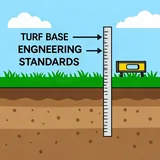
Turf Drainage and Ponding
Poor drainage leads to standing water, odors, soft spots and turf damage, and the published material says where it comes from: usu
Turf Heat Retention
Artificial turf absorbs heat and becomes uncomfortably hot in direct sun, and from late spring through early autumn in Boise that
Turf Fading and Infill Compaction
UV exposure fades turf over time and heavy traffic compacts the infill, flattening the fibres - and these are two separate failure
Turf Seams and Edges Lifting
Lifting seams and curling edges are usually installation problems - inadequate adhesive, or base preparation that was not good eno
If you are not sure which failure you are looking at, start below the surface. A base that holds water produces the odor, the puddles, the soft spots and the creeping seams out of one mistake, and each one gets blamed on the grass, the dog or the weather. Working through the five pages in that order costs nothing and usually saves the most.
Sources
- National Weather Service - local climate records, normals and extremes for Boise and the Treasure Valley
- USDA-NRCS official soil series descriptions - the series mapped across Ada County (Boise, Meridian, Eagle, Kuna, Star) and Canyon County (Nampa, Caldwell) - the two Treasure Valley counties on either side of the Boise River
- USA.gov local government directory - confirm the permit office and inspection path for the address in Boise before work starts